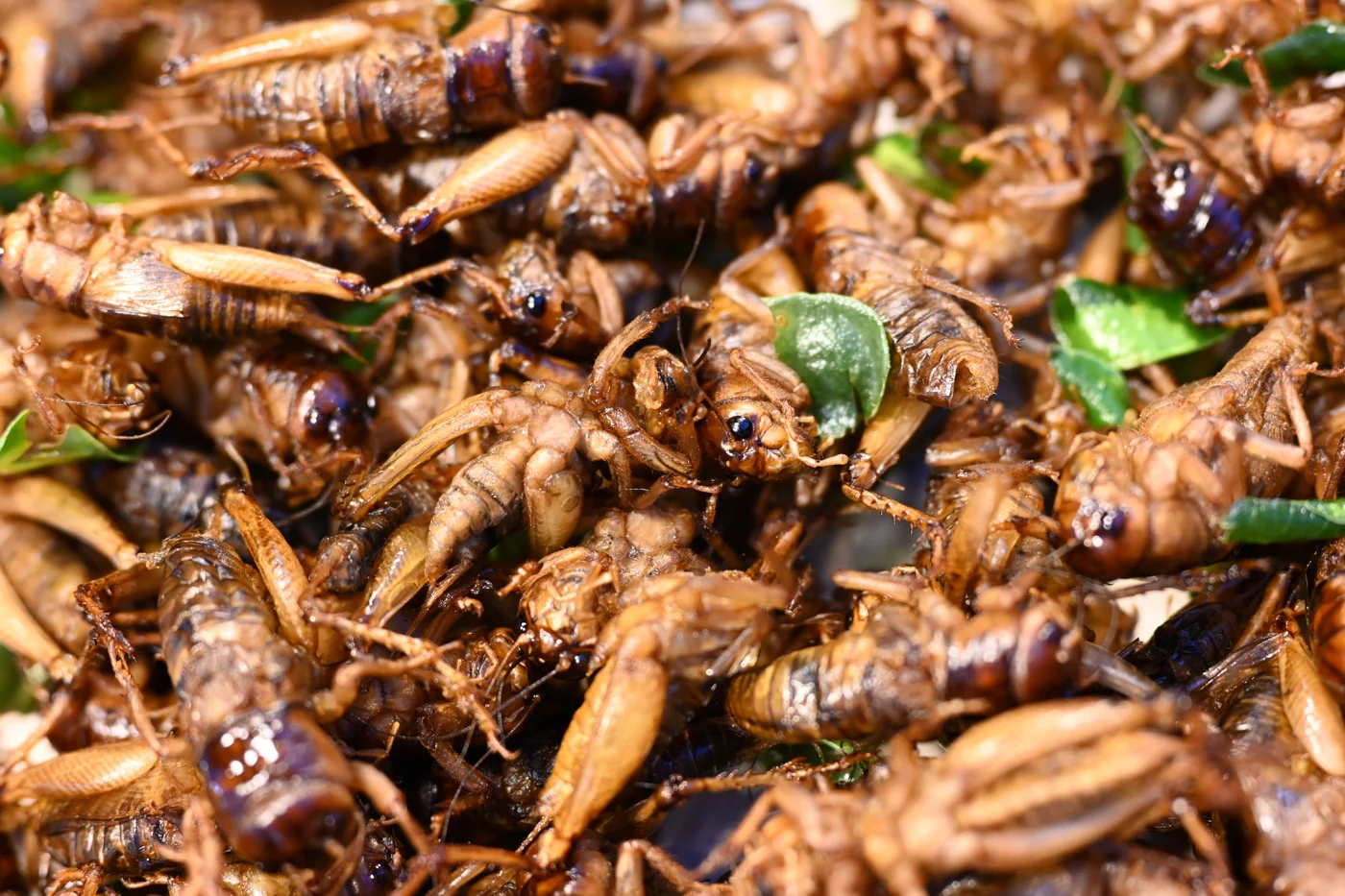
There is a whole world of Isan flavour beyond the dishes that usually introduce Northeast Thailand to visitors. Edible insects belong to that world: ingredients with their own names, seasons and culinary uses, and a place in the knowledge passed between generations.
For an international reader, the most rewarding starting point is curiosity about the food itself. What is it called locally? When does it appear? How is it prepared? Those questions open a conversation about the region that a quick photograph of a market snack can only begin.
A long place at the table
Entomologist Yupa Hanboonsong of Khon Kaen University describes a centuries-long history of insect eating in Thailand in a chapter published by FAO. Preferences differ across the country, and taste is an important reason people choose insects. The practice belongs to a varied food culture, with particular ingredients valued for particular qualities.1
That perspective allows room for individual preference. Some diners have favourites; others do not eat insects at all. Isan is a large and diverse region, and a familiar food in one household need not be a favourite in another.
A menu shaped by the seasons
A northeastern survey using data collected in 1999, published in the Khon Kaen Agriculture Journal in 2001, recorded 62 locally named kinds of edible insects. It linked their availability to places including paddy fields, farmland and reservoirs, and found a wide range during the rainy season. These are historical survey findings, rather than a count of what every market sells today.2
Read this way, a market becomes a seasonal record. Asking a seller when an ingredient is available can be as revealing as asking how it tastes. The conversation connects food to the places and conditions that make it possible.
Different ingredients, different stories
Giant water bugs: flavour in small quantities
The giant water bug, known as maeng da na (แมงดานา), has a recognised culinary role in nam phrik maeng da, a chilli relish. Its presence in a dish can be about aroma and seasoning, as well as the insect itself.1
Silkworm pupae: food beside the silk tradition
Hanboonsong also notes the northeastern preference for silkworm pupae, a by-product of processing silk cocoons. This connection brings two aspects of regional life into the same story: the thread used to make textiles and an ingredient enjoyed as food.1
Crickets and red ant brood: a wider pantry
A 2023 review of edible insects in Thailand documents crickets, red or weaver-ant brood, bamboo caterpillars and silkworm pupae among the foods available. Insects are eaten at different life stages, so an adult cricket and the immature forms sold as ant eggs are quite different ingredients. The review also describes preparation and processing ranging from familiar cooked foods to powders and other manufactured products.4
The craft goes beyond frying
FAO’s discussion of Thai insect cuisine includes oil-free preparations such as soups, curries and steaming, alongside frying. Thinking about insects only as crunchy snacks misses some of this culinary range. Preparation changes their role in a meal.1
From local knowledge to livelihoods
In 2013, FAO and Khon Kaen University published Six-legged livestock, examining insect farming, collection, processing and marketing in Thailand. Based on surveys and interviews across the sector, it documented the importance of small producers and the relationships between farmers, collectors, processors and sellers. Its figures describe that period; they should not be presented as a current industry census.3
The economic story is worth telling alongside the culinary one. A food that arrives in a small serving can have a much longer journey behind it. Asking who raised, collected or prepared it makes those people part of the account.
Let the food begin the conversation
The invitation is to look closely, ask respectfully and listen to the person who knows the ingredient. You may discover a favourite flavour, or simply leave with a better understanding of someone else’s table.
For Hello Khon Kaen, these foods offer another way to tell the region’s story: through knowledge of the seasons, the work behind a meal and the pleasure people take in what they choose to eat.
Explore more Food & Culture
Sources & further reading
- Yupa Hanboonsong — Edible insects and associated food habits in Thailand, FAO (2010), pp. 173–182
- Hanboonsong and colleagues — Edible insects survey in northeastern Thailand, Khon Kaen Agriculture Journal 29(1), 35–44 (2001); data collected in 1999
- Hanboonsong, Jamjanya and Durst — Six-legged livestock: Edible insect farming, collection and marketing in Thailand, FAO (2013)
- Krongdang and colleagues — Edible Insects in Thailand: An Overview of Status, Properties, Processing, and Utilization in the Food Industry, Foods 12, 2162 (2023)
- Singapore Food Agency — Insects for Food and Feed: consumer safety guidance
Sources checked 8 November 2026. Historical findings are identified by date. Cultural interpretations are the author’s; this article does not report new field interviews.