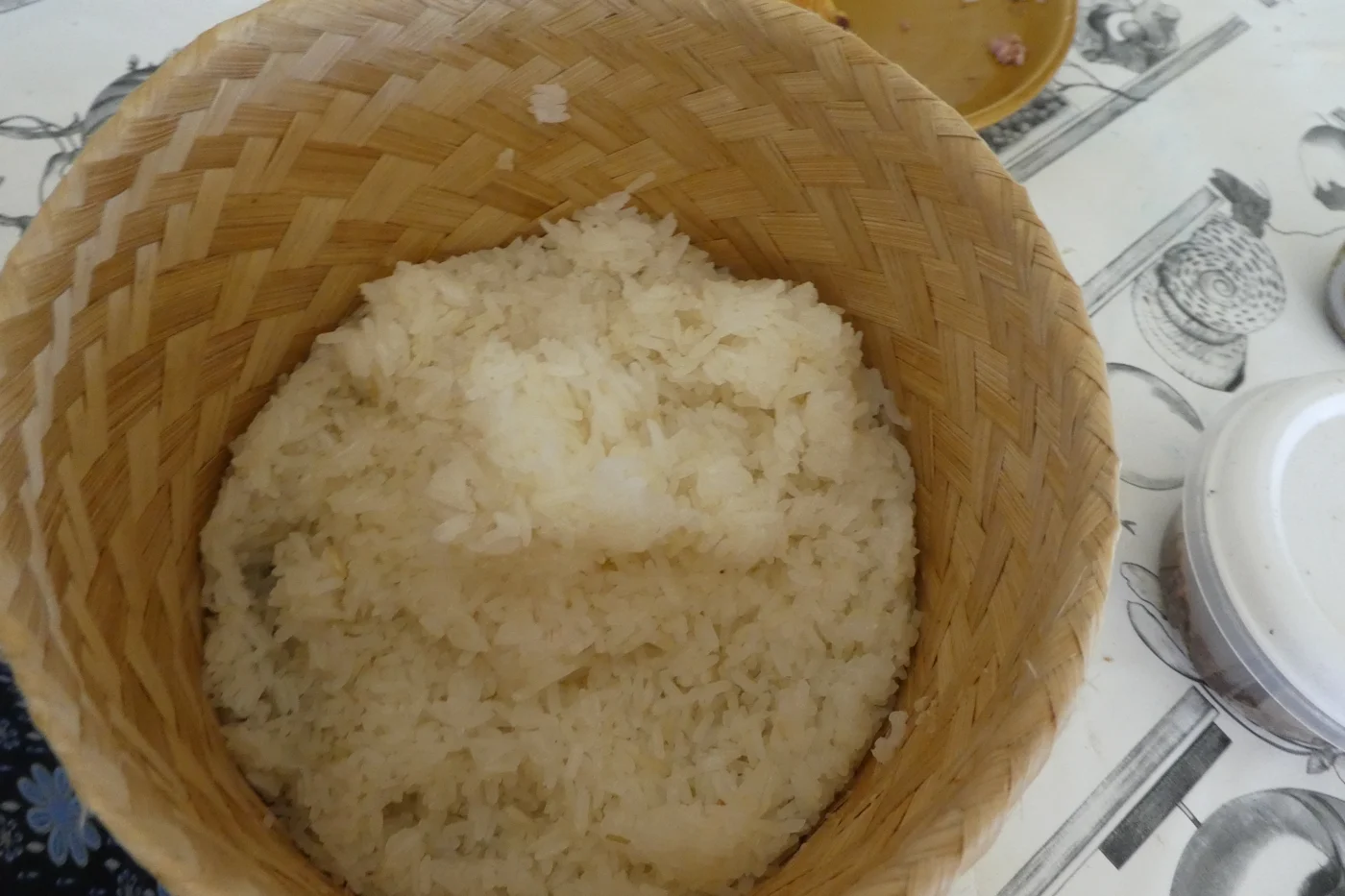
In Khon Kaen, a meal rarely feels complete without sticky rice. Known locally as khao niao (ข้าวเหนียว), it is much more than a side dish. For generations, it has been part of daily life across Isan, Thailand's northeastern region: carried to work, shared with friends and placed at the centre of family meals. To understand sticky rice is to discover something about the region's relationship with the land, tradition and home.
A Food Rooted in the Land
Sticky rice, or khao niao (ข้าวเหนียว), has a long history across mainland Southeast Asia, particularly in Laos and Northeast Thailand. Unlike fluffy jasmine rice, it has a naturally chewy texture and is traditionally soaked before steaming. Rice farming has shaped the seasonal rhythms, family work and community life of Isan for generations. Even as the region changes, sticky rice remains an everyday expression of belonging.
The Bamboo Basket: A Symbol of Home
The kratip khao (กระติบข้าว), a woven bamboo container for cooked sticky rice, is a familiar sight on Isan tables. It keeps rice together and ready to share, while also representing skills in bamboo weaving passed through communities. For many people, opening the basket recalls childhood meals and family kitchens.
Why Eat Sticky Rice with Your Hands?
A small portion of sticky rice can be pressed gently between the fingers into a bite-sized ball and enjoyed with grilled meat, chilli dips or vegetables. Its texture makes this easy and practical. Eating customs differ between families and settings, but the shared table remains central to the experience.
A Culture of Sharing
A typical Isan meal may bring together som tam, laab, grilled chicken, fresh vegetables and warm sticky rice. Dishes are often shared rather than served as separate individual courses. Mild sticky rice balances the sour, spicy and savoury flavours, while conversation unfolds around the table.
Rice, Faith and the Farming Calendar
Rice is woven into community and Buddhist traditions in Northeast Thailand. Cooked rice may be offered during almsgiving, while agricultural seasons inspire local celebrations. Bun Khun Lan, associated with the harvest in some communities, is one example. Customs vary between villages and provinces.
Khao Chi: Grilled Sticky Rice with a Story
Khao Chi (ข้าวจี่) is cooked sticky rice shaped into small patties or ovals, seasoned and grilled until lightly toasted. Many cooks brush the rice with beaten egg and grill it again for a golden coating. The contrast between its fragrant exterior and soft, chewy centre makes it a comforting snack. Its appeal comes from simple ingredients, a practical way to use cooked rice, and memories of cool mornings beside a charcoal fire.
Bun Khao Chi: A Tradition of Giving
Bun Khao Chi (บุญข้าวจี่) is a merit-making tradition observed in parts of Isan during the third lunar month, often around February. It is part of Heet Sip Song (ฮีตสิบสอง), the region's cycle of twelve customary monthly observances. Families and neighbours prepare grilled sticky rice as an offering to Buddhist monks. The occasion reflects faith, generosity and community ties; specific practices vary by locality. The value of the offering lies in the intention to give, not the cost of the food.
Recipe: Traditional Isan Khao Chi
Grilled sticky rice with egg · Makes approximately 6 pieces · 10 minutes preparation plus 15–20 minutes grilling (using already cooked rice).
Ingredients
- 3 cups cooked glutinous (sticky) rice, warm
- 2 eggs, lightly beaten
- ½ teaspoon salt, or to taste
- A little oil for the grill or pan, optional
Method
- Season: Gently mix the salt through the warm cooked sticky rice.
- Shape: With damp hands, divide into six portions and press into firm ovals or patties about 1.5–2 cm thick.
- Toast: Grill over medium-low charcoal heat for roughly 3–5 minutes per side until the surfaces begin to firm and brown lightly.
- Brush: Coat both sides with beaten egg, return to the grill and cook until the egg is fully set and golden. Add a second thin coating if desired.
- Serve: Enjoy immediately while warm, with a lightly crisp outside and soft centre.
Kitchen tips: Use glutinous rice rather than jasmine rice; avoid high heat, which can scorch the coating. A lightly oiled non-stick grill pan works when charcoal is unavailable.
Food safety: Refrigerate leftover cooked rice promptly, do not leave it at room temperature for extended periods, and reheat thoroughly before shaping and grilling.
Where to Try Sticky Rice in Khon Kaen
Look for sticky rice at local markets, neighbourhood stalls and restaurants serving som tam, laab and grilled chicken. Khao Chi may also be found at traditional food stalls, especially in cooler months and around local merit-making events. Availability varies by vendor and season.
More Than Rice: A Connection to Home
For people from Isan living elsewhere in Thailand or overseas, the aroma of warm sticky rice can evoke family kitchens and childhood gatherings. Khon Kaen is a growing, modern city, but a bamboo basket of rice and a few shared dishes still tell a powerful story about its way of life. In Isan, sticky rice is not simply what people eat. It is part of how they live, share and remember home.
The Stories Behind Isan Food
Read next: Laab: The Isan Dish That Brings Flavour, Fortune and Good Luck.